Grenada Print Map
View the electronic version of our 2017 Skyviews Grenada, Carriacou & Petite Martinique print map
About Grenada
Located at 61°40′W, 12°07′N, the State of Grenada is actually comprised of six islands, the largest being Grenada (132mi²/310km), followed by Carriacou (13mi²/34km²) and Petit Martinique. Grenada was originally an underwater volcano some 2 million years ago. The highest point, Mt. St. Catherine at 2,747ft/804m, is found in the central ridge of mountains. The spectacular Grand Etang Crater Lake is nestled at 1,740ft/530m above sea level.
Columbus sighted Grenada on 15 August 1498, on his third trip to the Caribbean, naming it Concepción in honour of the Virgin Mary, before hurrying on to his next stop. The island was re-named Mayo two years later and the French called it La Grenade when they first colonised it.
Fun activities today are rainforest tours, diving (the tour de force of Grenada diving must be the massive wreck of the Bianca C, a 600ft/200m cruise liner that sank near the coast after a fire in 1961), snorkelling, fishing, excellent scenic cruising, places of interest and shopping, especially spices. Grenada is known as the Spice Isle of the Caribbean as more spices (such as cloves, mace, cocoa, cinnamon, ginger and nutmeg and many others) are grown on Grenada per hectare than in any other place on the planet! In fact, Grenada produces a third of the world’s supply of nutmeg and it is the island’s biggest export.
Featured: Birds of Transboundary Grenadines
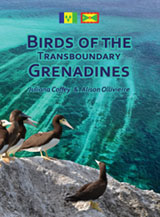
Authors: Juliana Coffey & Alison Ollivierre
Skyviews is pleased to feature this new resource which is ideal for anyone with an interest in birds and the natural world of these incredible islands and cays!
Birds of the Transboundary Grenadines is the first avian field guide to cover the islands and cays shared by the countries of St. Vincent & the Grenadines and Grenada. This book contains:
- 140+ pages of high-quality photographs of the birds and natural areas of the Grenadines
- 117 bird profiles with details on identification, diet, habitat, local knowledge, and sightings
- 14 detailed maps illustrating conservation areas and local toponyms on more than 50 islands and cays
- Full chapter of previously undocumented local ecological knowledge, folklore, and prehistoric-to-modern-day human values of birds

Local businesses
Going to Grenada and wondering where to stay, what to do, where to eat and how to get around? We’ve got you covered with our list of hotels, restaurants, activities, car hire, shopping & more. Browse through for more details.
Accommodation
Choose from hotels, real estate, villas & cottages
Cottages & Smalls Inns
Hotels & Resorts
Real Estate
Experiences
Try watersports, golf, scuba diving, tours & more
Air, Land & Sea
Restaurants
Lime at the bars, dine in the restaurants, take in the entertainment
Restaurants
Services
Get information on the island, medical facilities & other services
Education
Health & Wellness
Information
Marinas & Marine Services
Photography
Shopping
Shop for souvenirs, local crafts, art, jewellery, clothes & more
Art Galleries
Retail
Transport
Hire a car, jeep, bicycle or scooter to travel around the island
Events
Annual events
- Jan
- Feb
- Mar
- Apr
- May
- Jun
- Jul
- Aug
- Sep
- Oct
- Nov
- Dec
Events in January
New Year's Day (Grenada)
Public Holiday
Events in Feburary
Independence Day (Grenada)
Public Holiday
Events in April
Good Friday (Grenada)
Public Holiday
Easter Monday (Grenada)
Public Holiday
Events in May
Labour Day (Grenada)
Public Holiday
Labour Day Holiday (Grenada)
Public Holiday
Events in June
Whit Monday (Grenada)
Public Holiday
Corpus Christi (Grenada)
Public Holiday
Events in August
Emancipation Day (Grenada)
Public Holiday
Carnival Monday (Grenada)
Public Holiday
Carnival Tuesday (Grenada)
Public Holiday
Events in December
Christmas Day (Grenada)
Public Holiday
Boxing Day (Grenada)
Public Holiday
History and Culture
Some 3,000 years before Colombus’ sighting, the island’s first inhabitants were the Amerindian Calvignoid, the Galibi, the Suazoids and Arawaks. The fierce Caribs evicted this last group in the 1400’s and did battle with both French and English until their own defeat.
The English created the first settlement of Megrin Town in 1609 but took the first get-away ship they could because of the continuous harassment from the fierce Caribs. The French thought they would have a try and indeed managed their relations with the Caribs more successfully. Both groups were surprised when 100 Dutch privateers arrived in 1675 and took over the whole island. A to and fro between the French and British resulted in a final ceding to Britain through the Treaty of Versailles in 1773. Peace was still not to be had as an internal rebellion led by Julien Fedon plunged the administration into chaos when he commandeered over 90% of the island.
A New Era
The island became an Associated State within the British Commonwealth in 1967 and finally achieved independence on February 7th, 1974. However, internal struggles weakened the leadership and finally the US, worried about the impact of another communist regime in the region, invaded the island in 1983 and removed the ruling People’s Revolutary Army from power. Since then, the island has enjoyed a politically stable environment alongside a substantial USAID package.